When you move data between cloud providers, your transfer tool has access to everything: your storage credentials, your file contents, your metadata. The architecture of that tool - where it runs, where credentials are stored, where data flows - determines whether you maintain control or hand it to a third party.
Most people evaluate migration tools on speed and features. Few ask the harder question: who else can see my data while it’s in transit?
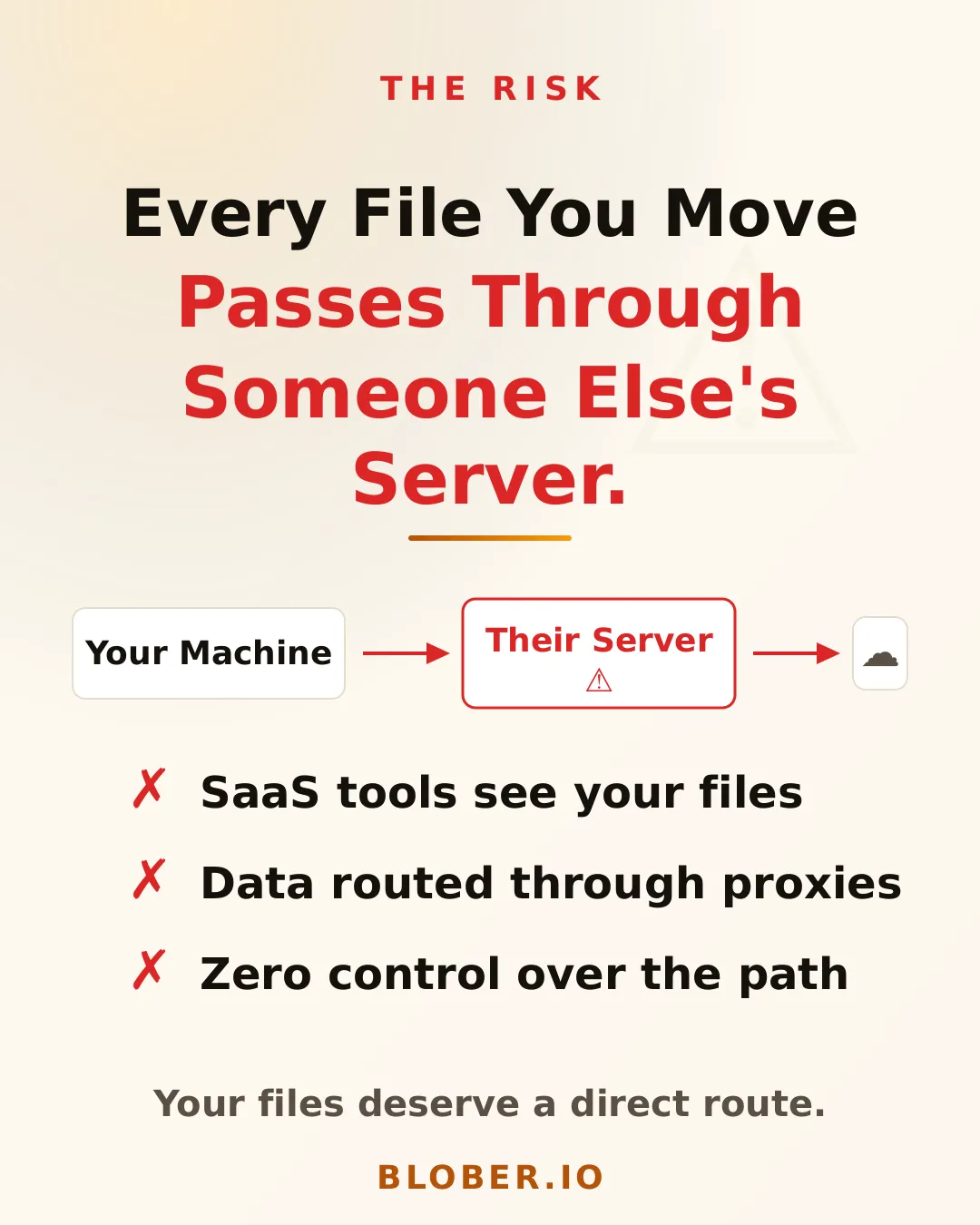
Tools like Flexify.io and MultCloud run on their own servers. Your credentials are stored in their infrastructure. Your data routes through their systems during transfer.
| Concern | Flexify.io | MultCloud |
|---|
| Credential storage | Flexify servers | MultCloud servers (Hong Kong) |
| Data path | Through Flexify infrastructure | Through MultCloud servers |
| Account required | Yes | Yes |
| OAuth token storage | Server-side | Server-side |
| Offline operation | No | No |
| Privacy policy scope | US (Florida) | Hong Kong |
This doesn’t mean these services are malicious. But it means:
- A third party stores your cloud credentials - API keys, OAuth tokens, or access grants
- Your data transits infrastructure you don’t control - introducing a man-in-the-middle by design
- You’re subject to their privacy policy and jurisdiction - which may change without notice
- A breach of their systems exposes your credentials and potentially your data
For personal photos, this might feel acceptable. For business data, media archives, legal documents, or HIPAA/GDPR-adjacent workloads - it’s a serious risk.
rclone runs locally on your machine. Your data goes directly to and from each cloud provider. This is a genuine trust advantage over SaaS tools.
However, rclone stores credentials in a plaintext configuration file (~/.config/rclone/rclone.conf). Anyone with access to your filesystem - malware, another user, a compromised backup - can read your cloud credentials directly.
rclone does offer an encryption option for the config file, but it’s opt-in and requires manual setup. Most users leave it in plaintext.
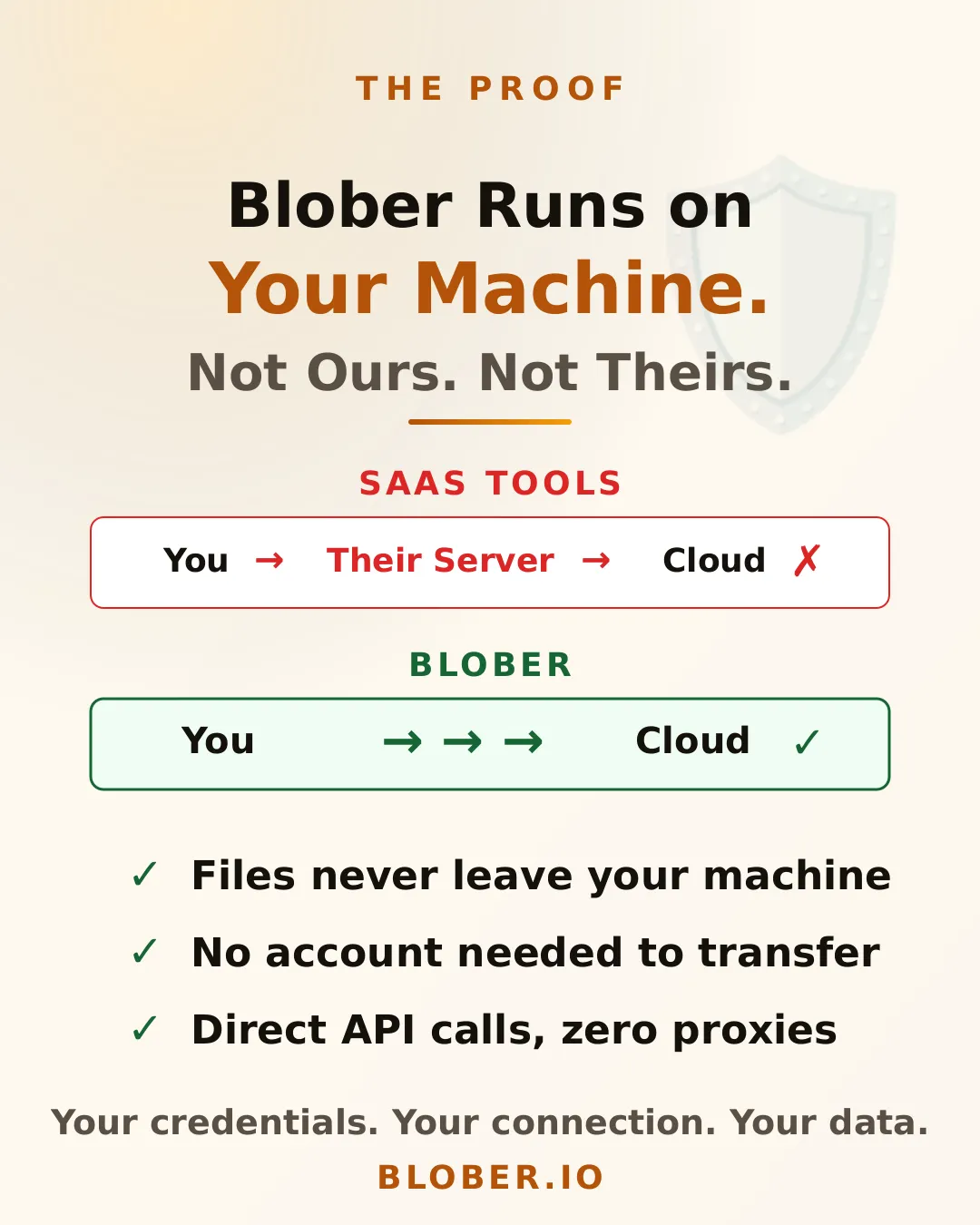
Blober runs entirely on your machine with encrypted credential storage. Your data flows directly between your machine and each cloud provider. No intermediary.
| Concern | Blober |
|---|
| Credential storage | ✅ Local, encrypted |
| Data path | ✅ Direct (no middleman) |
| Account required | ✅ No (license key only) |
| OAuth token storage | ✅ Local only |
| Offline operation | ✅ Yes |
| Jurisdiction | ✅ Your machine, your rules |
Your cloud storage credentials are the keys to your kingdom. An AWS access key or a Google OAuth token doesn’t just grant transfer access - it grants full access to your storage: read, write, delete, list. If a SaaS provider’s database is breached, your credentials are in that breach.
With Blober, credentials never leave your machine. There is no remote database to breach.
When a SaaS tool transfers your files, those files pass through their servers. Even with SSL encryption in transit, the data is decrypted on their infrastructure before being re-encrypted and sent to the destination. This is not end-to-end encryption - it’s hop-by-hop.
With Blober, data flows directly from source to your machine to destination. No hops through third-party infrastructure.
MultCloud operates from Hong Kong. Flexify.io from Florida, USA. Each jurisdiction has different data protection laws, government access rules, and breach notification requirements. When your data or credentials live on their servers, you’re subject to their jurisdiction - not yours.
Blober runs on your hardware, in your jurisdiction. No foreign servers. No cross-border data flow through third parties.
SaaS tools require active accounts. Cancel your subscription, and you lose access to your workflows, task history, and potentially your configured connections. This creates a soft lock-in that has nothing to do with the quality of the tool.
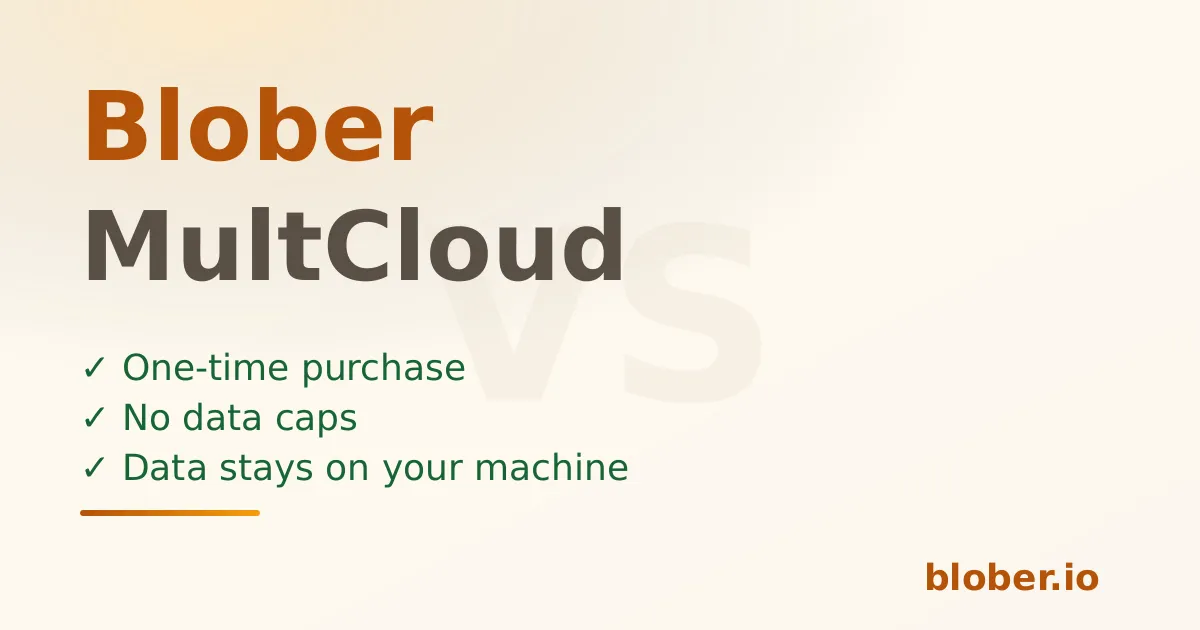
Blober is a one-time purchase. No account, no subscription, no leverage.
| Dimension | SaaS (Flexify, MultCloud) | CLI (rclone) | Blober |
|---|
| Credentials | Third-party servers | Plaintext local file | ✅ Encrypted local |
| Data path | Through vendor servers | Direct | ✅ Direct |
| Account required | Yes | No | ✅ No |
| Offline capable | No | Yes | ✅ Yes |
| Risk of vendor breach | Exposes your credentials | N/A | ✅ N/A |
| Jurisdiction | Vendor’s country | Your machine | ✅ Your machine |
| Subscription lock-in | Yes | No | ✅ No |
- Freelancers and agencies handling client data - you have a professional duty to control where that data flows
- Photographers and videographers with irreplaceable media - GoPro footage, wedding archives, production masters
- Small businesses without dedicated security teams - reducing your attack surface matters
- Anyone under GDPR, HIPAA, or SOC 2 obligations - third-party data processors require disclosure and contractual agreements
- Privacy-conscious individuals who simply want to own their data pipeline
Your migration tool is not a neutral pipe. It’s an active participant in your data flow. Its architecture determines whether your credentials are stored remotely, whether your files transit foreign servers, and whether you maintain sovereignty over your data.
Blober is designed around a simple principle: your data, your machine, your rules.
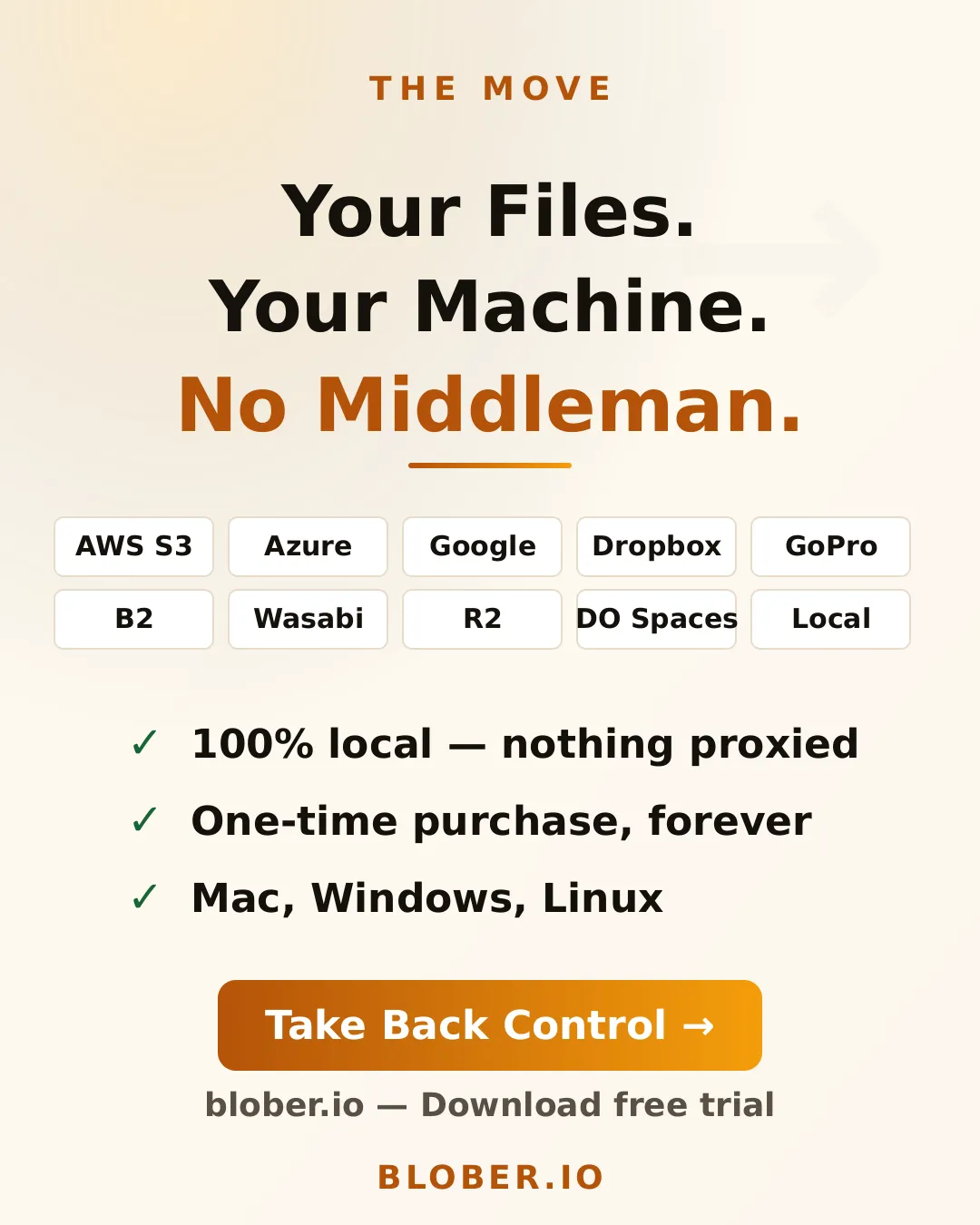
No accounts. No SaaS intermediaries. No credential exposure. One-time purchase, local execution, direct transfers.
Get Blober →